EPISODE 7
Reginald Mobley on Race, Access & Why Bach Belongs to Everyone
with Reginald Mobley
Grammy-nominated countertenor
programming consultant, Handel & Haydn Society
Grammy-nominated countertenor Reginald Mobley joins tenor and host Nick Phan for a wide-ranging conversation about what it means to belong in classical music — and who gets to decide.
Reginald grew up in Gainesville, Florida, raised by grandparents who told him that classical music "wasn't for us." Yet a badly-played fugue in sixth-grade band set off an obsession with Bach that has defined his career ever since. In this episode, Reggie traces his path from a church choir to a barbershop quartet gold medal, from a trumpet scholarship he never used to discovering he was a countertenor — and how Bach has been his constant companion through all of it.
Their conversation moves from the personal to the philosophical: why calling Bach's music elitist is itself a form of gatekeeping, what it's like to bring Bach into a small Black Adventist church in the deep South or a jazz club in New Orleans, and how microaggressions in classical spaces compare to the reception he gets outside of them. Reggie also reflects on the parallel between Bach's music and the African American spiritual tradition — both born out of the same era, both using song to process grief, build community, and sustain human dignity.
The aria for this episode is the third movement of BWV 36, Schwingt freudig euch empor, composed for the first Sunday in Advent — a duet for tenor and oboe d'amore whose text meditates on the soul's longing to be united with Christ, like a bride approaching a bridegroom.
ARIA
Die Liebe zieht mit sanften Schritten from Schwingt freudig euch empor, BWV 36
PERFORMERS
Nicholas Phan, tenor
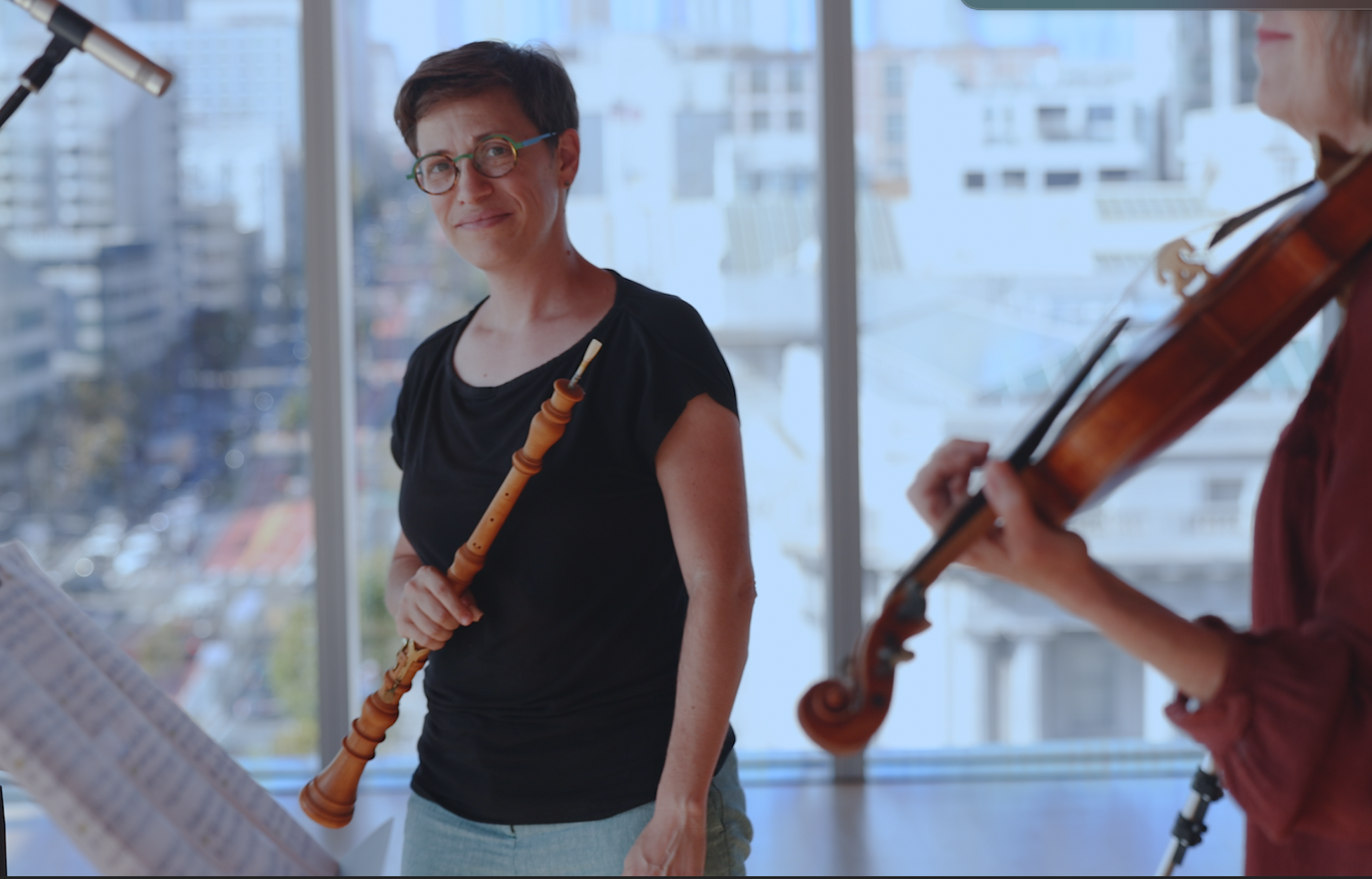
Debra Nagy, oboe d’amore
Elisabeth Reed, cello
Corey Jamason, organ
SOUND (BWV 36 only): Lolly Lewis | VIDEO (BWV 36 only): Clubsoda Productions | VIDEO (Interview): Nicholas Phan
This episode was filmed in partnership with Les Délices and the San Francisco Conservatory of Music.
This project is a fiscally sponsored project of FRACTURED ATLAS.
To find our more information and to make a TAX-DEDUCTIBLE donation to support the continuation of this project please click the button below
TRANSCRIPT
[00:00:00] S. McGINNIS: Do
[00:00:00] I think the music of Bach is for everyone? That's a complex question.
[00:00:13] Z. REAMS: Yeah. I, I do believe that
[00:00:17] STUDENT 1: I am strongly in the camp of, yes, I do think it's for everybody. No matter how young you are, no matter how old you are.
[00:00:26] S. McGINNIS: I mean that just, it brings up a lot of other questions. I think my visceral, immediate response would've would be, well, of course, yes, all music is for everyone.
[00:00:37] M. BEATTIE: I think if it, if it isn't for everyone, it's a pity that it isn't.
[00:00:41] STUDENT 1: It teaches you something about yourself. It teaches you something about other people. It teaches you, you know, something about why we're here about human existence.
[00:00:51] Z. REAMS: I think that there's something that you're gonna find.
[00:00:55] M. BEATTIE: I know that my engagement with the music has made me a more nuanced thinker, a more just able to absorb complex emotions in ways that, I mean, it's partly that I've gotten older too, but I think Bach can, Bach can be, I can be them.
[00:01:20] N. PHAN: Hi. I'm Nick Phan and this is Bach 52.
[00:01:29] On this week's episode, I have a conversation with Grammy nominated counter tenor, Reginald Mobley. Reggie is a dear friend and an extraordinary colleague. We met many years ago singing at the Oregon Bach Festival together, and so it's the music of Bach that brought us together as friends and colleagues.
[00:01:47] Our conversation was wide ranging, starting with how Reggie feels that Bach was one of the primary influences on his musical life as a child growing up in Gainesville, Florida, and how. His music is one of the key things that set him on the path to being a musician and living the life that he's lived.
[00:02:07] He also talked in our conversation about how he thinks this idea that Bach may not be for everyone is elitist and touches on issues of access and equity. For him, he relates a lot of personal stories about how he was told growing up that this music wasn't for him, it was for other people, and how, despite that.
[00:02:30] He's come to discover that this music box music in particular, is one of the primary ways he's best able to express himself through music. So in addition to watching this episode, definitely be sure to check out Reggie singing on his website, which is located in the description below, and be sure to check out his latest album because.
[00:02:54] Which was nominated this year for the Grammy for Best classical solo vocal album. And also be sure to check him out on my most recent album, stranger, where we performed Nico Neely's Duet for Counter Tenor and Tenor. Lorne is my liking. There's also a video that's linked in the description below to that piece.
[00:03:14] I hope you enjoy our conversation. I was really moved by the things Reggie had to say and was so generous to offer about his life in music and his experiences with Bach. Also, be sure to stick around for the aria at the end of this episode taken from Tata 36
[00:03:33] for tenor and obo. Hi Reggie.
[00:03:37] R. MOBLEY: Hi Nick.
[00:03:39] N. PHAN: This series is, I mean, we've talked about this. The series is basically. Poking at this question. Do you think the music of Bach is for everyone? And it's a big question, so, but let's start with some basics first. 'cause you know, I just wanna make sure people know who you are and how you got into the music of Bach.
[00:03:57] I mean, you and I met. Singing Bach.
[00:04:00] R. MOBLEY: Yes.
[00:04:01] N. PHAN: We met at the Oregon Bach Festival.
[00:04:02] R. MOBLEY: We did.
[00:04:03] N. PHAN: And you know, so Bach is pretty central to our friendship and our working relationship, even though we do tons of other things together. Can you just start off by telling us, you know, how did you get started singing and how did the music of Bach enter your life?
[00:04:18] R. MOBLEY: So Bach was pretty much an early influence in, in my training, in my. Kind of my path into music. I, of course, like every black queer countertenor, I had this semi origin story of starting up singing in a, in a small church choir, gospel choir. But when I was old enough to decide whether or not I wanted to continue singing, I decided not because I wanted to play with Transformers.
[00:04:43] I, I just didn't like singing. But my sixth grade year. I joined the concert band at my middle school and we played three things that, that, that first semester, baby Elephant Walk, Kokomo, and a transcription of a Bach Prelude and Fugue and Sea. I knew Kokomo, I loved the Beach Boys. Uh, baby elephant walk.
[00:05:05] I'd heard before, but I hadn't heard Bach before, or I hadn't known Bach before. And. The first time we played through this fugue terribly, I was done. Like it was a grand epiphany. Like there was something that just clicked in me that I'd never, I'd never thought I would, I would experience in music like this.
[00:05:25] I didn't know what I was hearing or what I was doing, but there was something about that, about a fugue that just. Completely possessed me. Uh, from that point forward, I would go to the public library, Gainesville, Gainesville, Florida, where I'm born and raised, and I would check out every cassette and CD of music that had box name on it.
[00:05:47] And I, I was, I was insatiable. Like that was all I could do from that point forward. And even though I stopped playing formally in the band, once I got to high school, I always kept with Bach. And all the music that was lumped in with. With recordings of him, which meant Handel, which meant Vivaldi, which meant Albani and other Baroque greats.
[00:06:09] And by the end of my high school career, I had rejoined the chorus and decided that I wanted to pursue a life in music. Before then, I was planning to be an artist or an architect. My high school was a drafting school, I mean a magnet school for drafting and architecture. And I was in that program and I was also an a PR program.
[00:06:28] So I had a full ride to a school in graphic arts. But. Uh, my mother convinced me to apply to for an HBCU Oakwood College, which is now Oakwood University in Huntsville, Alabama. And I applied, and not only did they accept my scholarship, but they actually matched my art scholarship for music. And so I went to Oakwood on a trumpet performance scholarship.
[00:06:50] Didn't touch the trumpet a single day. I didn't even bring it with me. I immediately switched to voice, uh, and took lessons and. The big work we did that, that year was Messiah, and then everything just went from there. But every chance I could, I always found a library or found a recording and went back to Bach.
[00:07:08] For some reason, he became, from that moment in sixth grade, even till now, he became that almost friend that has just kind of been there, uh, as a part of my life through all of my experiences, and I assume always will be.
[00:07:23] N. PHAN: Wow. So a Bach fugue. In middle school band,
[00:07:29] R. MOBLEY: and it's not even Bach. I found out later when I, when I tracked it down, that it was, it was Canal.
[00:07:35] N. PHAN: Oh,
[00:07:36] R. MOBLEY: but
[00:07:36] N. PHAN: you were being told it was
[00:07:37] R. MOBLEY: Bach. I was told it was Bach, and, but I did then from that point forward, find real Bach. And from that point forward, like I can tell the difference. Now. I, I think I, I've, I've grown in my education, but that prelude and fugue still holds a special place in my heart.
[00:07:55] N. PHAN: How interesting.
[00:07:56] So. Uh, the form was the gateway drug.
[00:07:59] R. MOBLEY: It was
[00:08:00] N. PHAN: amazing. And so were you always a countertenor or did you start as a different voice type?
[00:08:04] R. MOBLEY: Oh, absolutely not. I was, I was a baritone. I started as one of those, those sufficient baritone barit tenors. My teacher always thought that I was going to be of the Domingo type of being able to be a baritone with a very high extension.
[00:08:17] And I was going to have a brilliant career. I was every Italian aria she could give me at an appropriate age, she always did. And. I didn't like it. I didn't enjoy it. I, I found it constricting. I found it difficult and it was when I went back to Florida, I was a University of Florida and I was taking lessons there with Jean Ronald, uh, who was a wonderful teacher that he heard me singing.
[00:08:43] I joined a Barbershop Quartet in college, collegiate Quartet Station 59, and we competed internationally and we won the gold medal in 2000 and he. Heard us practicing downstairs and just singing it in the common area. And I sang the tenor line, which of course the top line, which is basically an alto line.
[00:09:04] And when he knew that we were done, he grabbed me by the arm and dragged me up three flights of stairs to his office, which is great for an asthmatic. And, and he basically had me sing through a scale. He played an, he had played an E-flat major scale, and I sang at the octave below as I. I thought I was supposed to.
[00:09:24] He said, no. Sing where I play. And so I said, okay. And sang this scale. And he warmed me down, warmed me up, and then stopped and basically said, do you know what you are? I was like, no. Am I in trouble? He's like, no, you're a counter tenor. You are absolutely a counter tenor. And I'm so really so happy about that.
[00:09:40] And I, of course, you know this kid from Gainesville, Florida. I said, well, what's the counter tenor? And he said, well, you're also an idiot. But here is. A stack of CDs of contents that he had in his office and he said, go home. Listen to this. When you come back to your lesson next week, this is what you'll be doing for the rest of your life.
[00:10:02] N. PHAN: That is wild. It seems like you've been kind of, I mean, the way you're describing, and it sounds like you've been pulled towards this life as a countertenor who focuses in on the music of Bach. I mean, is Bach still a primary focus of your work these days?
[00:10:18] R. MOBLEY: Intended. Yes, there's, there's still something about Bach that I feel most at home.
[00:10:25] I've never felt more at home than since singing the music that I, of my tradition of, you know, black American tradition. So yes, it's, it's definitely a huge chunk of what I do or try to do, even in, in how my career has transitioned into also doing a lot of work in diversity and equity and, and activism.
[00:10:44] Bach has still. F somewhere in my, in my tool bag.
[00:10:49] N. PHAN: So interesting. I feel a kinship with you in that way because, you know, I feel like it's not obvious that I would feel at home in the music of Bach, but there's something about his music where I really do feel at home and I had sort of a similar journey.
[00:11:01] You know, I had people hearing me and thinking, oh, you're gonna sing all this Rossini in Bel Canto, and I'm like, Ugh, I don't really like that music. I mean, I respect and admire the people who do it so well and I respect the music for what it is, but it's not my cup of tea. And you know, this sort of like more dramatic tradition that is really rooted in the music of Bach is like where I feel at home.
[00:11:23] But you know, I'm like a queer half Asian guy from the Midwest. Like it, it's just, it seems very strange like on its surface. And so it's interesting 'cause I feel the same draw and it does feel like home. And I don't know, it touches on this idea of like identity, which I feel like everybody is so. That's a conversation that everybody is kind of having around this music and kind of questioning.
[00:11:46] Many people, I think, question whether we need to, you know, continue teaching it or you know, how central is it. And I think that's what's brought me to this series and this question of, do you think it's for everyone? 'cause I'm so curious to hear everybody's different perspectives and so. Since he's so naturally brought us to that question.
[00:12:06] I mean, do you think the music of Bach should be for everyone? Is for everyone?
[00:12:11] R. MOBLEY: I think so. I think so. Through a process of elimination because. To say that the music of Bach isn't for everyone, I think is constricting. I think it's limiting. I think it's elitist and I think it's what got us to the problem we have right now in regards to how classical music is seen and treated, particularly in the us.
[00:12:34] N. PHAN: Interesting. You say it's, you think it's elitist, which is something I'm really curious to hear more about.
[00:12:39] R. MOBLEY: I think to say that box music isn't for everyone is elitist. You can't own. Sound. Ultimately, you can't hoard sound and the way we've arranged it. Yes, of course. I mean, the themes of Bach being mostly centered around Christianity, does that speak to every, every person around?
[00:13:01] No. There, there are always going to be issues, but the thing is, is that whether or not you listen to the music of Bach, whether or not you like it, whether or not you wanted it, that should be your choice. And that's what I mean by is it for everyone. And, and by that I say yes, because it's your choice. You don't have to listen to Bach, you don't have to love Bach.
[00:13:22] But the music is there for you if you want it, if you decide to find it. And I, and, and because I come from a, a time, you know, and a, and a place in tradition that, that music, we were literally told that that was not for us. I lived the other side of that question for so long. I was, uh, raised with by my grandparents, and whenever I finally started bringing classical music into the house, my grandmother would just, she would just become irate.
[00:13:52] She hated that funny music, that white people music, that music, that, that represented the people that, that treated her a certain way as she grew up in the deep south, you know, in the first half of the 20th century, that was not for us. And that's what I was told and that's how I was taught to think about classical music and to hear just to, to feel a fugue for the first time and to feel a similar connection and instinctual connection, just as I feel to gospel and spirituals and jazz and everything else, to me says that everything else is a lie.
[00:14:34] The music that that speaks to me is obviously for me, and if you are a person who is of of faith, I consider myself a, a pretty devout Christian, believe it or not. And I think that that music being a gift from God can't be limited or withheld by anyone else. I think if it's something that works for you, then it is absolutely for you and no one should be able to tell you otherwise.
[00:15:00] And. And that also means that if someone doesn't feel, again, if someone doesn't feel that Bach is for them, if someone doesn't like the music of Bach, then don't listen to it. You have so much more out there. But this organization of 12 tones that we've locked ourselves into through the Western European classical tradition, the way this one dude did it several hundred years ago, absolutely speaks to me in a way that.
[00:15:29] I don't think much else has. There is a practical magic, I think in music. There is more to music than just art and entertainment, but also service. And I think there's something about box music that creates a space for truly understanding, not just the human element. Our, our, our frailty as well as, as our, our virtue in a way that no one else does.
[00:15:57] There's, there's something about it that just truly speaks to me in that way. And perhaps it could be, you know, I say, I often talk a lot about how spiritual slave songs are also early music. I mean by the fact that the 30 years war began in 1618, and the first slave ship hit Jamestown in 1619. I mean, these.
[00:16:18] These two things came up at roughly at the same time. Granted, things went a lot longer here in the States, but post 30 years war, the, the generations after there was still that almost instinctual and communal processing of grief and confusion and life through music of Schutz in the Bach family and, and, and others around Zella as well.
[00:16:43] I mean, what else were African slaves doing? But, but communicating and processing and finding a way through the horror of slavery, then through music, through song, and has continued past slavery through Dred Dred Scott, through civil rights up till now. I mean, it, there is something that I think a lot of people have forgotten, and it's that music has that ability to continue to.
[00:17:12] To safeguard and kind of keep us whole, keep us human, keep us together, it links us and gives us a sense of strength and resilience that I don't think, I don't think we, we, we truly appreciate in the 21st century. And so all that to say, absolutely, I think the music of Bach is for everyone.
[00:17:35] N. PHAN: I mean, that's beautifully said.
[00:17:36] Thank you. I, I agree with you. In this day and age, we're not really inclined towards community in a bizarre way because in some ways we're more connected than ever with the technology at our fingertips. I mean, the phones and, you know, the social media,
[00:17:52] R. MOBLEY: the watches.
[00:17:53] N. PHAN: The watches. I know. I mean, it's, it's extraordinary.
[00:17:56] We are, we can connect with someone on the other side of the globe for free, basically at the drop of a hat, and yet. Somehow this idea of community service and building community and using empathy and compassion to propel ourselves forward as a society seems to be missing. And I personally find that in the music of Bach, which I mean, you know, we know so little about him, but what we do know is that he did not really sound like a very compassionate person.
[00:18:33] He seemed like he was pretty cantankerous, but his music is filled with that. And I, I mean, I assume it's because of the faith that's behind it. Um,
[00:18:45] R. MOBLEY: yeah. I mean, you say cantankerous, but there had to be more to him as someone who. Loved wine and beer. And when musicians like Teleman came to Leipzig, he head to the Bach house.
[00:19:02] I mean, there, there, I mean we, we focus on one aspect a lot and you know, and some focus on the idea of him being the fifth evangelist. But he was just a man. I mean, he was as human as the rest of us, I mean. What, you know, the, some will, will, you know, claim that there may have been issues like, you know, paranoid narcissism and, and other sorts of, will retroactively apply these, these psychological conditions.
[00:19:29] And it seems pretty, you know, pretty evident from some of, uh, some of his writings and letters, but we don't actually know. But what we do know is that he did have a family that he loved, he did have friends that he loved and things that he did. Obviously paramount in chief. Among those things were, his, was his devotion to, to God, which was evident through his music.
[00:19:52] But, but I think that there are some cantankerous people and some people who love beer, who exist now, who can connect to potentially who he was and find that in his music. I don't know. I think you, what you said before was absolutely brilliant, Nick. I, I, because that's, I think. I never thought about that, but I think that's the problem.
[00:20:14] We can connect with literally everyone, but that doesn't mean we can understand everyone. We don't have the ability to, to, to connect ourselves through empathy and compassion to the person that is translated into text or someone on a, on a Zoom screen. I think that's. That human connection that comes through being able to connect with people is, is, is lost.
[00:20:38] And that's, I I, I never really thought much about that, but that's really, that's very true. I think about it all the time.
[00:20:46] N. PHAN: I mean, it's interesting because, you know, I was talking to Jeremy Dank recently in one of my last interviews, and one of the things that he said is he thinks that the music of Bach is actually quite current right now with young people in his experience because.
[00:21:00] There's something so algorithmic about it and something so mathematical and sort of technological about the way it's constructed, that it has this sort of appeal to the current moment. And you know, I think that description, that description of his music is, is spot on. You know, that is kind of how it's composed.
[00:21:23] But it's interesting. It also does, because it's music, as you say, it's this gift. There's, it's filled with emotion and drama and in ways that, you know, the actual technology at our fingertips, I'm not sure is totally engendering all the time. You said the music of Bach felt like home. I think that's a gift, but I mean, and what other ways has his music kind of influenced and changed your life
[00:21:50] R. MOBLEY: aside from from hi his music, feeling.
[00:21:54] Feeling like home, feeling familiar, feeling like something I knew or know. There's just so much more than, than just the emotional, you know, base connection that I feel. I mean, as you, as you just said before, there is that technological aspect to it. There is that the, the, the magic and, and, and, and numbers that occurs in V Music and more than that.
[00:22:18] Uh, his ability to set text is next to, is, next to none, in my opinion. I mean, we, we, we talk about leader forever. We talk about, you know, Schubert and, and s and Wolf, but we never talk about Bach in that same way. But when Bach sets a word, when he sets a line. The music itself says it as well. I mean, this is why I, I hate memorizing is because I also love just seeing the movement of the notes and the way it's, and the way it, the way it shapes and contours and even more.
[00:22:55] So if you get a chance to actually perform with, you know, with copies of the, of the manuscript is to see how he literally draws the phrases and directions in, in the very bars and how he ties the notes. I mean, it's all, all there. Like I don't natively, I don't speak German fluently, but I'm able to communicate it just based on how the music is set.
[00:23:21] I'm able to, to bring those, those, those concepts behind the words and phrases forth just by how incredibly masterfully he, he sets these lines. I mean, thinking of, of, you know, seeing as an evangelist, you know, as well as anyone, how the way he sets even the, the cock crowing is, I mean, it's a master stroke.
[00:23:46] N. PHAN: Yeah, no, I mean, the efficiency in those notes, there's, so, there's so few of them in the evangelist writing, but like, they contain worlds and invite so much of your imagination. I mean, you're right that you don't, in a way have to speak. The language, because he's done such a great job of giving you all the clues in the music, using his music in concert halls and in like the great, you know, in churches and whatnot all over the world.
[00:24:15] Have you taken his music into places that, into communities where it's not necessarily assumed that his music would've played?
[00:24:25] R. MOBLEY: I have. I mean, I've, I've sung. S Bach Arias in, I've taken it home and I've sung them in church.
[00:24:35] N. PHAN: What is that experience like in Gainesville?
[00:24:39] R. MOBLEY: It's interesting. It's, it's, it's not what, what I would've expected.
[00:24:44] I was, I'm always a little nervous, you know, how they're going to not just perceive the music of Bach in. A small black, 70 day Adventist church in the deep South, but also per perceive me as a countertenor, you know, because it's still very rare to encounter one in certain areas. And the idea of, of a, of a male singing in a higher register, there's still that stigma as well.
[00:25:13] So those two things together, I come in with a lot of nerves. And I always leave these experiences feeling like a complete fool for feeling that way in the first place because that's never the case. If you just bring this music, honestly. And s and even if you say a little bit about it before you sing it, just to give some context to, you know, a congregation that does not speak German, they're never anything but appreciative.
[00:25:38] They're never anything but loving of, of, of the music that, that I sing of Bach. And I realized that all that pressure was completely self-imposed that. No one cares that I, that I sing an octave hire than they expect me to when I walk on stage. As a matter of fact, they're more understanding, accepting of it than most audiences in, in classical spaces here and in Europe.
[00:26:02] I mean, I still get the football player, I still get the, I thought you were a bass. I still get the, you know, rugby player. I mean, the past several months of singing in, in, in mainly in Europe. Mainly in, in France and, and England. I got as much or more than I have in the States in years, so I don't, as long as you are convinced of it, I don't, I don't see why there's ever going to be any issue of, of Bach not being appreciated in an, in an unknown, unusual space.
[00:26:36] I've, I've sung acapella in, you know, in a, I know Mike Knight when I was, uh, at a, at a bar or a pub. You know, I, and I, and I realize that. People do love music. If you don't, if you don't patronize them and treat them as though they won't understand or or love what you have to share with them, again, this sequence of 12 tones, I mean however you organize it.
[00:27:01] I think as long as the intent is there and, and we truly give it, give our all, we allow ourselves to be vulnerable and put, put Reggie in that experience as I'm also giving them this music of Bach. Then people. I've never, I've never had an issue there. I'm sure there are places I haven't taken it that I haven't that I can, so I can't say for sure.
[00:27:22] I've never, well, I have sung a syn, jazz Sung Bachman Jazz Club. That's true. I, uh, that's, I sang Cantala 54 VI NDA with a small group in bright clothes in the middle of a jazz club in New Orleans. And. As deafening an applause and appreciation as you would hear anywhere else, as many people coming up to you after and buying you drinks as as anywhere else.
[00:27:52] I mean, it's music can and should exist ev everywhere. We are the ones who kind of place those rules and bars and, and, and put, put ourselves in boxes.
[00:28:06] N. PHAN: I, I do wonder if, I mean, yes, it's interesting how you say like some of it is self-imposed. I mean, I would argue that some of it is also imposed by society and like the heteronormative, white, patriarchal norms that are imposed upon all of us,
[00:28:21] R. MOBLEY: our favorite,
[00:28:23] N. PHAN: apparently stuck around for a long time.
[00:28:28] Your response to the question in some ways says that even though at first. You might feel apprehensive about going into a sort of quote unquote, unfamiliar space for the music of Bach in a way that ends up feeling more comfortable sometimes than the places that we think of as the traditional Bach space.
[00:28:51] I mean, do I, am I hearing that correctly? Yes, absolutely. And I mean, how does that, how does that feel? I mean, does. Is, how does that feel to have people respond that way with, you know, sort of asking you if you're a base or I, you know, why aren't you a football player or what, you know, all of these,
[00:29:07] R. MOBLEY: how do I feel about microaggressions?
[00:29:08] That is, that's a completely different conversation because it, it, I, I'm upset. I'm usually pretty, pretty, pretty ticked off by it and, and not because of the, of the, of the slight of microaggression itself. But because I don't like the fact that some people are more focused on how I look, that they're missing the very thing, the very message, the very music I'm there to bring to them that they wouldn't, they wouldn't allow themselves the chance to, to look past.
[00:29:44] What they see and allow themselves to, to perhaps embrace what they hear. And, and I get upset because they didn't open themselves up to it. But also, I also am upset at myself because I feel like I failed in being able to, you know, share this, this, this art, this music, this, this message, this, whatever I'm, I'm presenting.
[00:30:08] Otherwise, I just, I just let it slide off my back. Because it's happened. I mean, to the point now that my, even my website, I use one of those quotes at the, at the head of my website to show that like I'm just not letting it bother me anymore. Because one reviewer, one person who says a completely ignorant thing will never, ever really darken the fact that there are five people who are still moved by what happened in that space.
[00:30:39] You know, like the, the person saying that, that I didn't, that I didn't sing something correctly or that I'm flubbed a word, they didn't like me compared to a, to a female contralto. I don't care about that. I care about the person that, you know, can't open their mouth because they're, they still crying.
[00:30:58] Like, as long as I reach a person, as long as I reach someone, I guess. That's what I take with me. At the end of the day. I can leave everything else on the table. I mean, it will, of course it does well up eventually, um, when it comes up again. But for what I want to do, that's, that's all I want to keep.
[00:31:17] That's all I wanna take with me, is how it affects people positively.
[00:31:23] N. PHAN: Thanks for sharing that. It's.
[00:31:28] I think it's such an important thing for people to consider in these conversations about DEI. You know, everybody just wants to sit around and say, I just want the best singer. As if that's some sort of simple metric that we can all easily arrive at and sort of ignorant of the hugely subjective nature of what we do and who we are as singers and how we're assessed.
[00:31:54] It's, we all have biases, including reviewers, including audience members, and you know, those things stand in the way. I really appreciate your generosity in a, taking the time to do this, and also, B, just being willing to share so much of your experience and willingness to be so open about it. I really appreciate it.
[00:32:18] R. MOBLEY: Thank you. Yeah. That's what music has taught me to be. I'm, I'm a textbook southerner,
[00:32:23] N. PHAN: you know,
[00:32:23] R. MOBLEY: I don't tell people what I have in my coffee, but, but music, especially us being singers, being vocalists is the most imp the thing that's required of us is to teach ourselves to be open and vulnerable, because if we can't do that on stage, then I think we fail because people.
[00:32:44] Connect to that. People in, people need to connect to that person on stage, and even if it's a role or just, you know, an oratorial or a recital, if you're not willing to be vulnerable, then I think you're really kind of not giving your all you're, you're not really doing your full job. And, and, and you can tell, you know, the people who are capable of doing that and right.
[00:33:11] N. PHAN: For the record, you never fail at doing it, so
[00:33:15] R. MOBLEY: thank you.
[00:33:16] N. PHAN: Thanks, Reggie.
[00:33:17] R. MOBLEY: Yeah.
[00:33:28] N. PHAN: The cantata for this week's episode is taken from Cantata 36, UR. Which has an interesting history because Bach repurposed a lot of movements from another cantata with the same name that he composed for a secular occasion. It was the birthday of a professor at the University of Leipe, Cantata 36. Was composed for the first Sunday in Advent and the Bible reading that Sunday is taken from the gospel according to Saint Matthew, and tells the story of Christ's entry into Jerusalem where people greeted him with palm fronds and laid cloaks down at his feet at his donkey's feet so that he wouldn't have to touch the ground as he entered the city.
[00:34:15] The aria is the third movement from the cantata.
[00:34:22] And it's composed for tenor and obo dere. The text of the aria is love approaches his beloved with gentle and slow steps. Just as a bride is delighted when she beholds her bride groom, so a heart follows after Jesus. The choice of the oba de mo makes a lot of sense. In this aria as Anato instrument, which basically is a duet for obo de and tenor, you have this imagery of two musical voices navigating this beautiful winding path.
[00:34:55] And the Aria's text is all about how our souls should aspire to love Jesus and to be united with Christ in an everlasting way, much like a marriage. So picking an instrument with the word love built into its name. Is a pretty logical and beautiful choice for the aria.
[00:37:29] MUSIC